The movement is the engine of a watch, and it decides how accurate the watch will be, how much attention it needs and what kind of character it has on the wrist. A watch can have a handsome dial and a fine case and still disappoint if the movement does not suit the owner’s habits. For a gift buyer, understanding the three main movement types is the simplest way to avoid a watch that is either too fussy or too plain for the person receiving it.
This guide explains how quartz, automatic and manual movements work, what each one demands from its owner and which kind of wearer suits each. It does not give accuracy figures for any particular model, since those depend on the specific movement and the conditions of use. For any service, repair or warranty question, speak to the manufacturer or a qualified watchmaker.
In brief
- Quartz is accurate and low maintenance.
- Automatic movements wind from the wrist and suit daily wear.
- Manual movements are hand-wound and suit collectors who enjoy the process.
Quartz movements
A quartz watch uses a small battery to send a regulated electrical pulse through a tiny crystal of quartz. The crystal vibrates at a precise frequency, and the watch counts those vibrations to keep time. The result is a movement that is accurate, reliable and inexpensive to maintain.
Quartz watches are the most common type sold today. They need little attention beyond battery replacement, which is usually due every few years. They do not need winding, and they keep good time without adjustment. Some quartz watches have additional features such as chronographs or calendars, which add mechanical or electronic complexity.
The drawback for some buyers is character. A quartz watch’s second hand often moves in discrete ticks, and the movement is less interesting to look at through a case back. For a gift, a quartz watch is a sensible choice when reliability and low maintenance matter most.
Automatic movements
An automatic watch is a mechanical watch with a rotor that winds the mainspring as the wearer moves. The motion of the arm swings the rotor, which turns a train of gears and stores energy in the spring. When the watch is worn regularly, it keeps itself wound and runs without a battery.
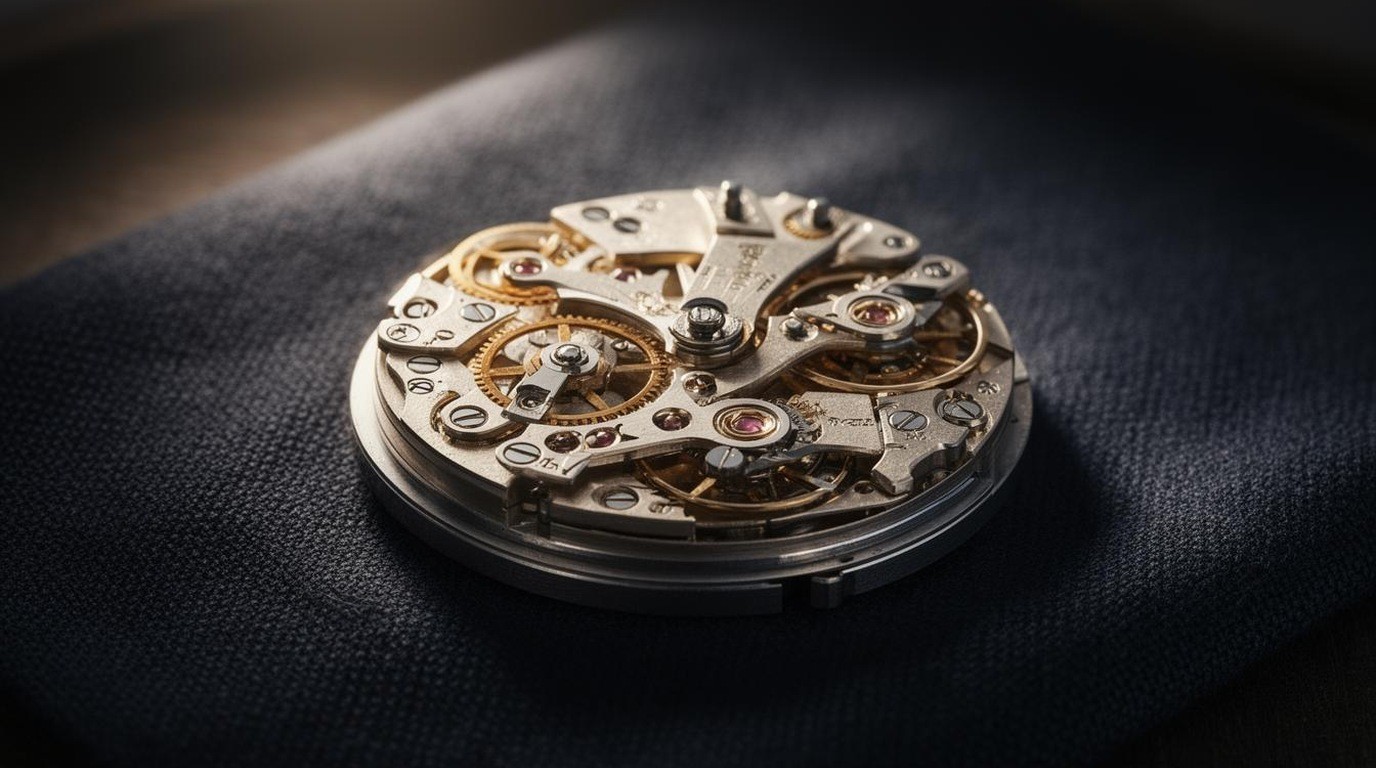
Automatic movements have a mechanical character that many enthusiasts value. The sweep of the second hand is smooth, and the movement can be admired through a transparent back. They need regular service, usually every few years, to keep the lubricants and the parts in good condition. Accuracy varies, and a mechanical watch can gain or lose a few seconds a day depending on the movement and the wear.
An automatic watch that is not worn for a few days can stop, and it may need winding by hand or on a winder before it runs again. Owners who wear their watch daily rarely notice this, but the habit matters for someone who rotates several watches.
Manual movements
A manual, or hand-wound, movement is wound by turning the crown each day or on a regular schedule. There is no rotor, so the mechanism is simpler in some ways and more demanding in others. A manual watch rewards a daily ritual, and many owners find the act of winding part of the appeal.
Manual movements are often thinner than automatics, because they do not need a rotor. They suit dress watches and owners who enjoy the routine. Like automatics, they need periodic service. The owner must remember to wind them, and forgetting can stop the watch.
Which suits which wearer
- A busy wearer who wants a watch that simply works: quartz.
- A wearer who enjoys mechanical craftsmanship and wears the watch daily: automatic.
- A wearer who likes a daily ritual and a slim, traditional watch: manual.
- A wearer who rotates several watches: quartz for reliability, with one mechanical watch for occasions.
Think about how often the watch will be worn. A watch worn every day suits an automatic, while a watch that sits in a drawer for weeks suits quartz better.
Service and cost
Quartz movements need battery replacement, and the cost is usually modest. Mechanical movements need periodic servicing, which involves cleaning, lubrication and adjustment by a watchmaker. Service costs vary by brand and movement, and a full service can be a significant expense. Ask the seller about the recommended service interval and what it costs before buying a mechanical watch.
Warranty terms also differ. Some makers cover the movement for a set period, while others exclude normal wear. Read the warranty, and check whether service must be carried out by an authorized center to keep the warranty valid.
Accuracy in practice
Accuracy is often quoted in figures, but these depend on conditions. A quartz movement is accurate to a few seconds a month under normal use. A mechanical movement may vary by several seconds a day, and its accuracy changes with temperature, position and wear. Neither type is inherently better for a specific purpose, and the right choice depends on the wearer’s needs.
Questions to ask before buying
- Is the movement quartz, automatic or manual, and is it made by the maker or sourced from another supplier?
- How often does the movement need service, and what does a service cost?
- What does the warranty cover for the movement?
- Is the watch rated for daily wear, and how does it handle a few days unworn?
- How easy is it to replace the battery, if it has one?
Our guide to watch case size and fit explains how to choose the case, and water resistance ratings covers what the numbers on the case back mean.
The short version
Quartz is accurate and low maintenance, automatic is mechanical and needs regular wear and service, and manual suits a daily winding ritual. Match the movement to the wearer’s habits, check the service interval and warranty before buying and ask the seller to explain what the movement will need over the years. The right movement is the one the owner will actually wear and care for.
Movement questions
Which movement is the most accurate?
Quartz movements are generally very accurate for everyday use. Mechanical movements vary more, and their accuracy depends on the quality of the movement and its regulation.
Does an automatic watch need winding?
A wearer who moves enough keeps it running. If it is left unworn, it may need winding before it is set.
Is a manual watch harder to live with?
It needs winding every day or two, which some owners enjoy and others find tedious.