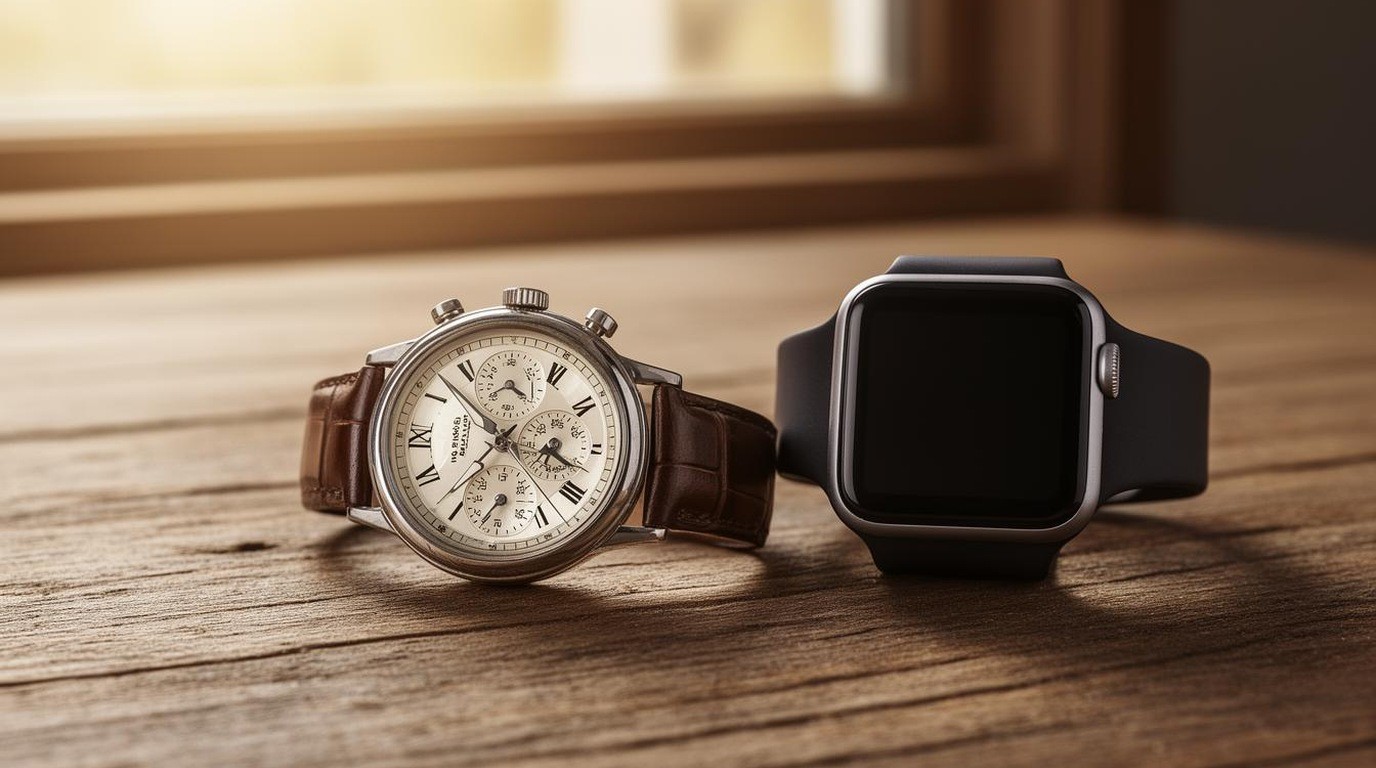
The question of whether to buy a smartwatch or a classic watch used to be simple: one told you the time and the other did a great deal more. Today the lines blur. Smartwatches keep time with a traditional look, classic watches are sold with features once found only in smartwatches, and the two categories are judged by different things. For a gift buyer, the choice depends less on the technology than on the recipient’s habits, expectations and the kind of care they are prepared to give.
This guide compares smartwatches and classic watches on features, battery life, long-term appeal, repair and resale, and it suggests how to match one to a gift recipient. It makes no health claims about any device. Smartwatches may include health-related features, and the accuracy and clinical value of those features are a matter for a physician and the manufacturer’s documentation, not for an article like this one.
Read this if you want a watch that tracks activity and notifications. You can skip it if you prefer a classic watch with a mechanical movement and little to charge.
What a smartwatch does
A smartwatch is a small computer worn on the wrist. It connects to a phone, shows notifications, runs apps, tracks activity and often includes a touchscreen, sensors and voice assistance. The range of features depends on the model and the operating system.
Smartwatches are at their best when the wearer wants information and convenience on the wrist: messages, calendars, maps, payments and fitness tracking. They need regular charging, usually every day or two, and their software is updated by the maker for a limited period. The lifespan of a smartwatch is often tied to the support the maker provides, which can end before the hardware wears out.
Health-related features in smartwatches are described by the maker, and their accuracy and usefulness vary. We do not make claims about them. For any health concern, speak to a physician, and treat device readings as general information only.
What a classic watch does
A classic watch tells the time and, in many cases, a few other things such as a date or a stopwatch. A mechanical or quartz movement keeps the time without a screen or software. The appeal is mostly in the design, the craftsmanship and the way the watch becomes part of the wearer’s style over years.
Classic watches need less daily attention. A quartz watch needs an occasional battery change, and a mechanical watch needs service every few years. They do not depend on a phone, and they do not become obsolete when an operating system is retired. Their value is often in their longevity and their character.
Battery and charging
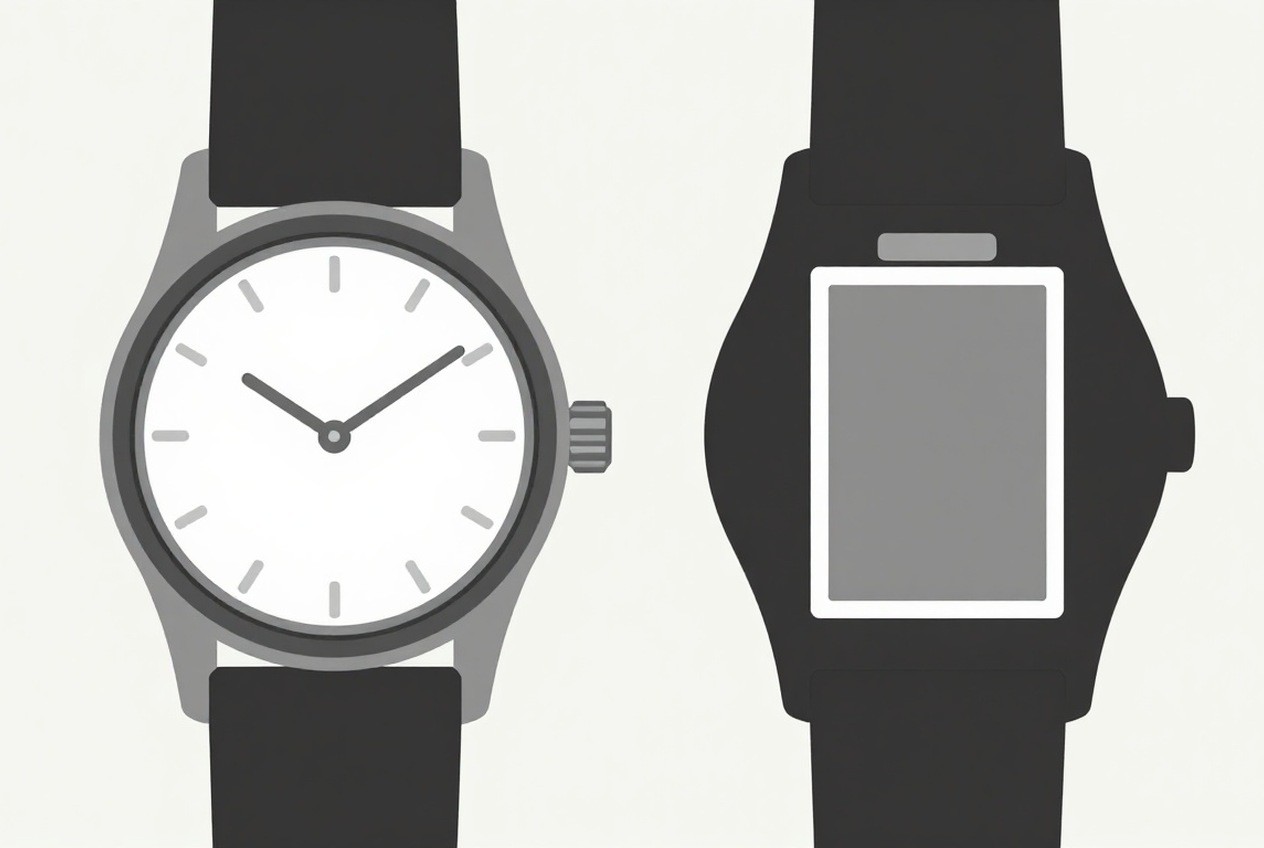
A smartwatch’s battery is the limit that most owners feel. Battery life varies with the features used, the screen brightness and the kind of tracking enabled. Many smartwatches need daily charging, and some need it more often when features are used heavily. Charging is a habit, and a dead watch is a common complaint.
A quartz watch can run for years on one battery. A mechanical watch needs no battery at all, though it needs winding if it is not worn regularly. Consider how the recipient will manage charging before choosing a smartwatch.
Software and support
A smartwatch depends on software that the maker updates for a set period. When support ends, apps may stop working, security updates may cease and the watch may no longer connect to new phones. Check how long the maker promises updates, and whether the watch works with the phone the recipient uses.
A classic watch does not have this issue. Its life is determined by its mechanism and its maintenance, which can continue for decades when serviced by a qualified watchmaker.
Repair and resale
Smartwatches are repaired by the maker or an authorized center, and the cost of repair can be high relative to the device’s price. Battery replacement is sometimes not possible without professional service. Resale values drop as newer models appear.
Classic watches can be serviced by a watchmaker, and many keep their value or appreciate over time, particularly for well-known brands and limited editions. We do not estimate resale values or investment returns for any watch.
Matching the watch to the recipient
- The recipient uses a phone constantly and wants notifications on the wrist: a smartwatch.
- The recipient wants a watch for work, travel and everyday use with minimal maintenance: a quartz classic watch.
- The recipient enjoys mechanical craftsmanship and wears a watch daily: an automatic classic watch. Our guide to watch movements explains the differences.
- The recipient is active and wants fitness tracking: a smartwatch with the features they will use, though health-related readings should be discussed with a physician if relevant.
- The recipient is unsure: a classic watch as a safer gift, or a gift card that lets them choose.
Questions to ask before buying a smartwatch
- How long will the maker provide software updates?
- Does the watch work with the recipient’s phone, and what are the requirements?
- How long does the battery last with the features they will use?
- What is the warranty, and can the battery be replaced?
- Does the watch have health-related features, and where can the recipient read about their limits?
Questions to ask before buying a classic watch
- What is the movement, and what service interval does the maker recommend?
- What does the warranty cover, and does it require authorized service?
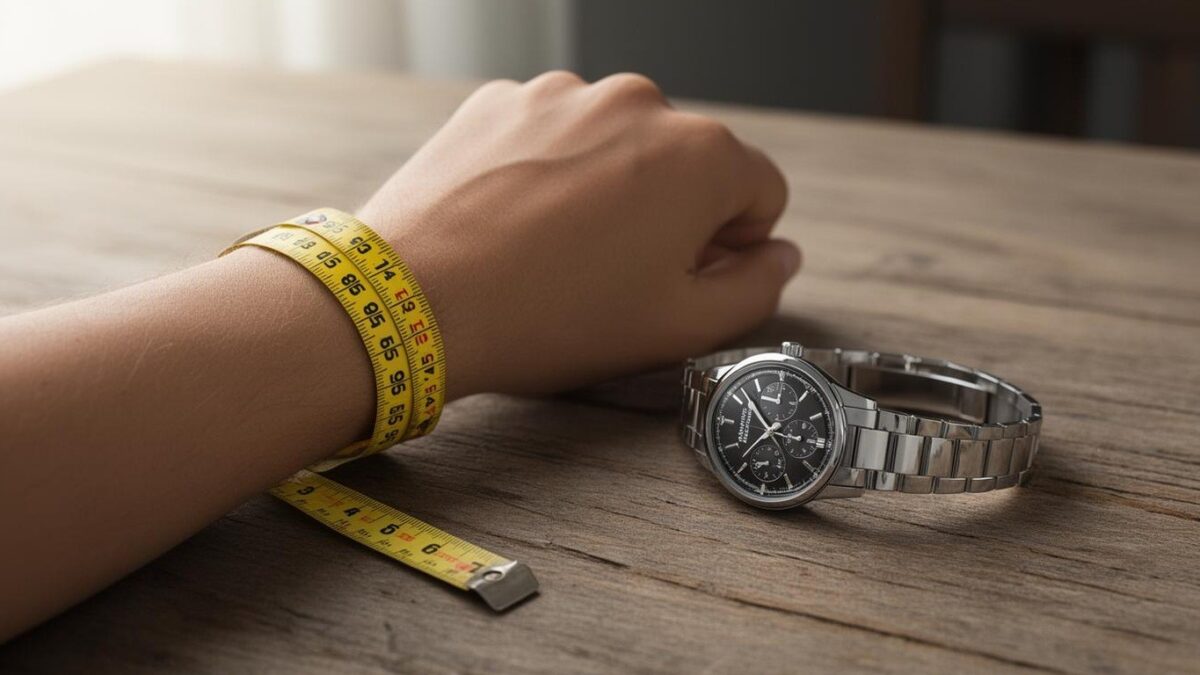
- How is the watch sized, and can the strap be changed?
- What is the water resistance rating, and what does the maker say it covers?
Our guide to water resistance ratings covers what the numbers mean, and case size and fit explains how to choose a watch that sits right on the wrist.
The short version
A smartwatch offers information and convenience with a short lifespan tied to software support and charging habits. A classic watch offers craftsmanship and longevity with less daily demand. Choose by how the recipient lives, what they expect from a watch and how much care they are willing to give. For any health-related feature, the recipient should speak to a physician, and for any repair or warranty question, the maker is the right contact.
Takeaways
- A smartwatch offers features and needs regular charging.
- A classic watch offers craftsmanship and needs little maintenance.
- Choose by how you will wear it every day.
Want to understand the inside of a watch? Our guide to watch movement types explains quartz, automatic and manual.