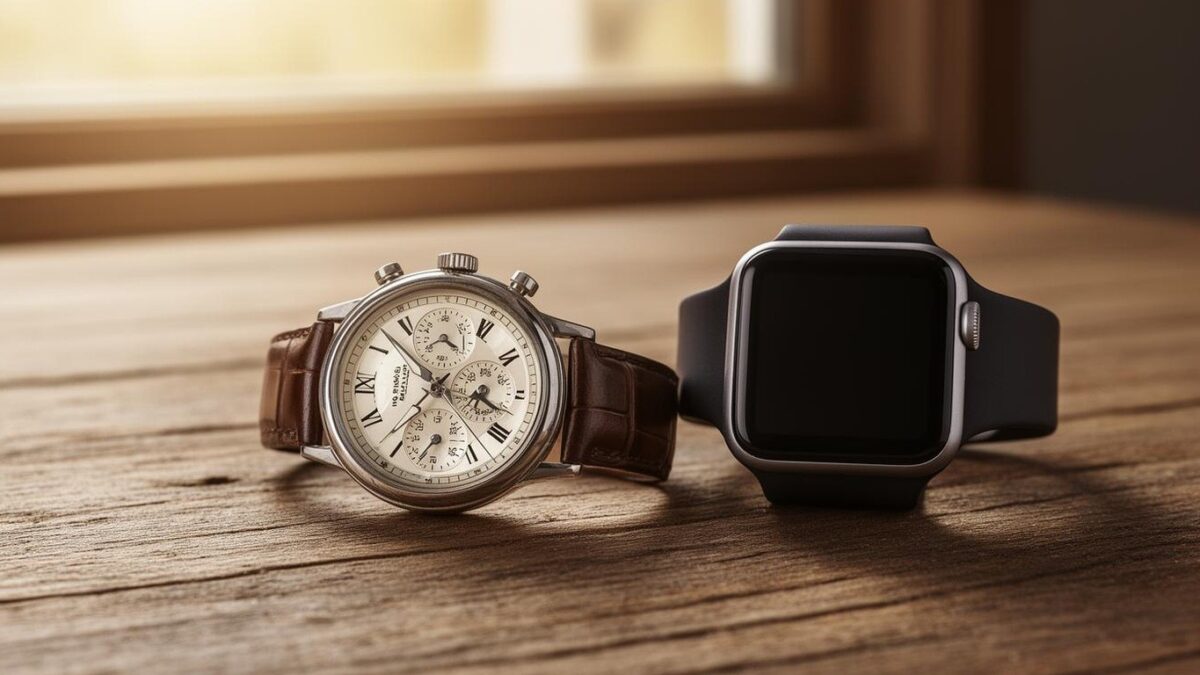
A watch can be beautifully made and still feel wrong from the first hour of wear. The dial may be too large for the wrist, the case too thick under a cuff or the lugs, the horns that hold the strap, too wide for the strap that comes with the watch. These problems are rarely visible in a photograph and often invisible in a short trial on a shop cushion, and they are the most common reason a gift watch is returned or quietly left in a drawer.
This guide explains how to measure a wrist, how to read case diameter, thickness and lug width in a specification, how straps change the fit and what to ask when you cannot try the watch on. It is about comfort and proportion. It does not evaluate any particular watch, and it does not replace a fitting by a qualified jeweler or watchmaker when one is available.
Short answer: case size and lug width decide how a watch sits on the wrist. A useful starting point is the lug-to-lug measurement, which shows how far the case reaches across the wrist.
Measure the wrist first
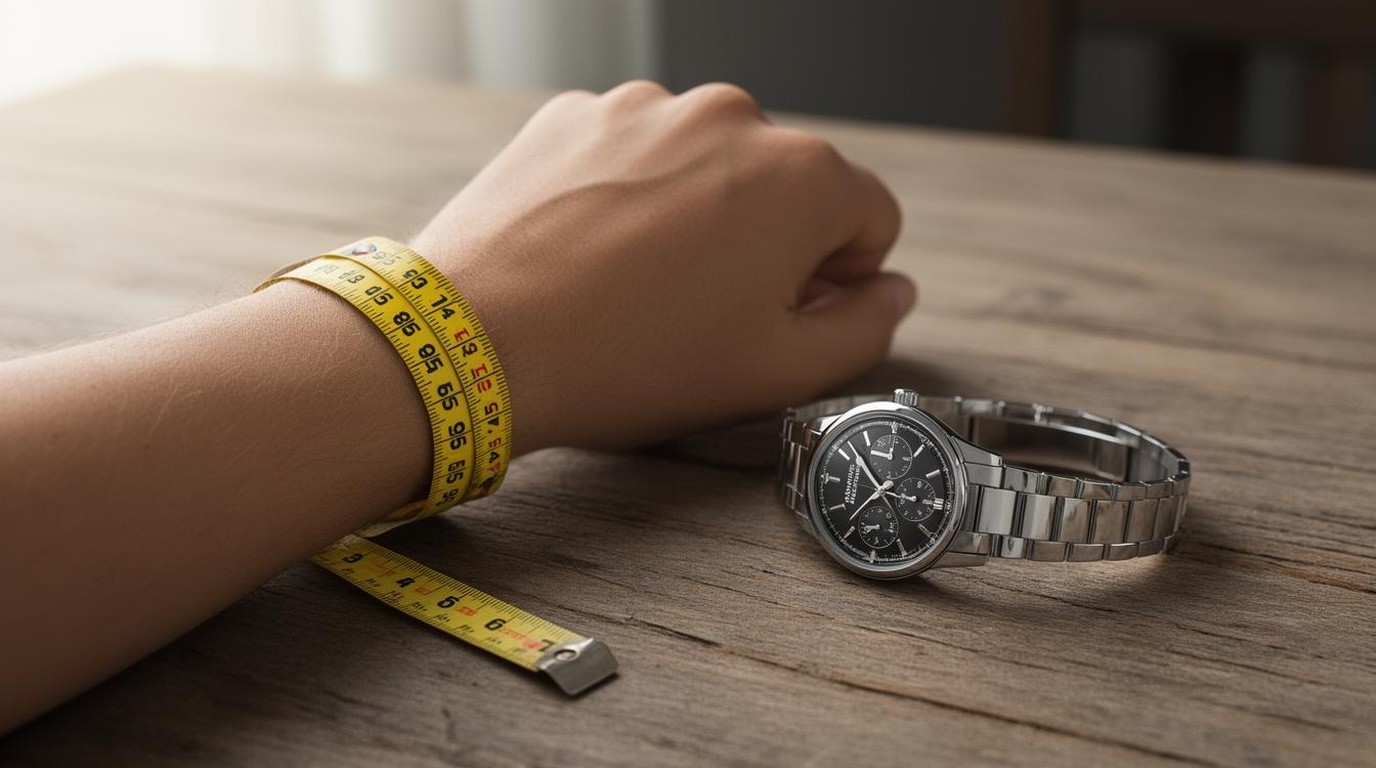
Take a flexible tape measure and wrap it around the wrist, just above the wrist bone where a watch normally sits. Read the measurement in centimeters or inches. A wrist of about 15 to 16 centimeters is often described as small, a wrist of about 17 to 18 centimeters as medium and a wrist above that as large. These bands are guides only. Wrist shape matters as much as circumference, since a flat wrist and a round wrist can take the same watch very differently.
If you are buying for someone else, measure their wrist with their permission, or check their existing watch’s size if they wear one. Ask them about their preference for a bigger or smaller face.
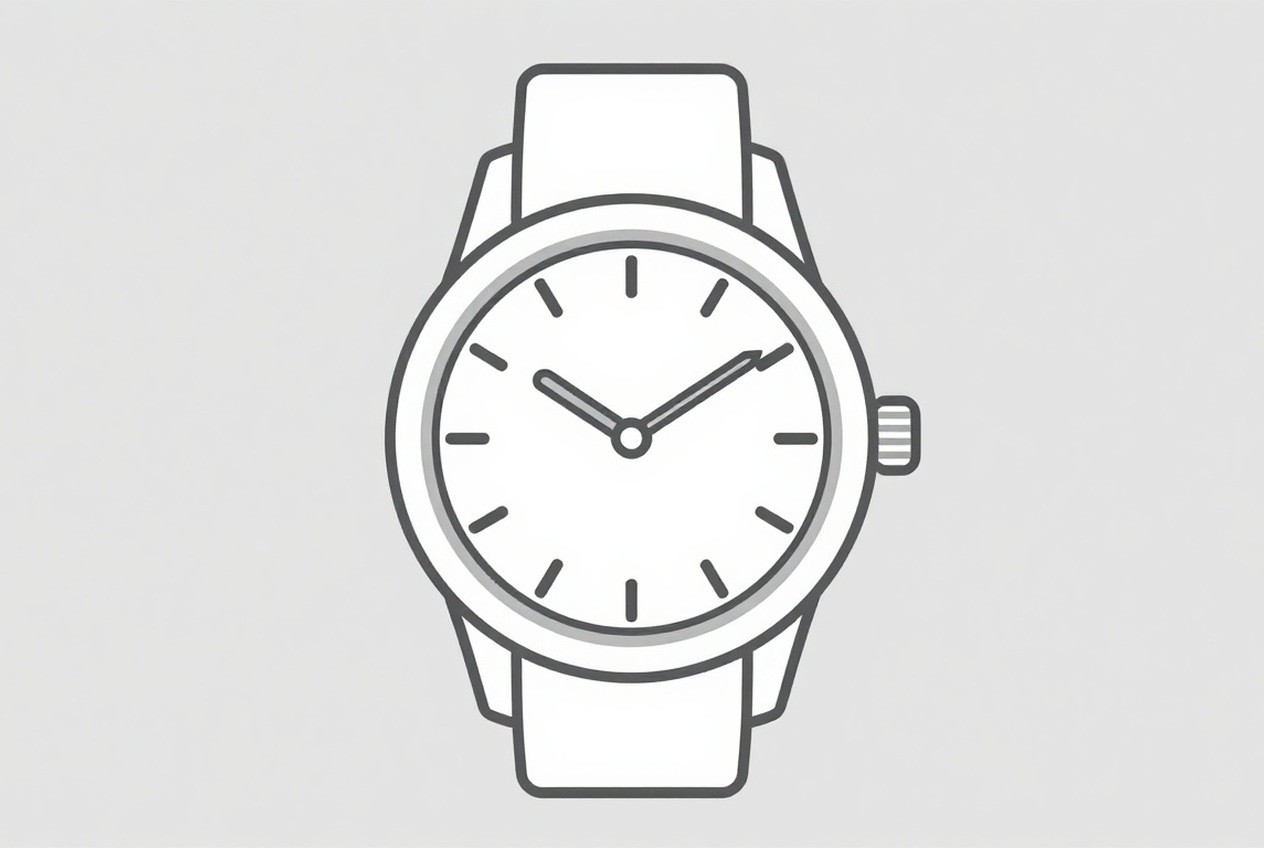
Case diameter and thickness
The case diameter is the width of the watch face across the case, usually measured in millimeters without the crown. A larger diameter gives a bold presence, and a smaller one suits a slim wrist or a dress watch. Many men’s watches fall between about 38 and 44 millimeters, and women’s watches are often smaller. These figures are typical ranges, not rules.
Case thickness matters too. A thick watch can look bulky and may not fit under a shirt cuff. Thickness is measured from the caseback to the top of the crystal, and it is often given in millimeters. A slim watch suits a formal cuff and a thick watch suits casual wear. Check how the watch sits when you hold it against the wrist.
Lug width and the strap
The lugs are the projecting parts of the case that hold the strap. The distance between the lugs is the lug width, usually given in millimeters. The strap must match this width exactly to sit properly. A strap that is too narrow leaves gaps, and one that is too wide will not fit at all.
Straps come in standard widths, and many watches use one of several common sizes. If you change the strap, check the lug width before buying. Some straps are sold with quick-release pins, which make changing easier. Our guide to the strap and bracelet options explains the common materials, but for fit the key figure is the lug width.
How strap length changes comfort
The strap or bracelet must be long enough to fasten comfortably and short enough to avoid excess length. Many straps have a range of holes, and the watch should sit snugly without digging into the skin. A bracelet with links can be adjusted by removing or adding links, usually with a tool, and some jewelers offer this service.
Check the length of the strap before buying, particularly if the wrist is small or large. A strap that is too long can flop and catch on things, and one that is too short can feel tight. Ask whether the watch can be fitted with a different length at the time of purchase.
Proportion and visual balance
A watch looks right when its face, case and strap work together. A large face on a small wrist can dominate the arm, and a small face on a large wrist can look lost. Look at the watch in a mirror, with the sleeve in its usual position. If you can, ask the seller to show the watch on a wrist close to the buyer’s size.
Consider the style of the watch as well. A chunky sport watch suits a broad wrist and a casual outfit, while a slim dress watch suits a narrow wrist and a formal cuff.
When you cannot try it on
Many gift watches are bought online. In that case, check the specifications carefully and compare them with the wrist measurement. Look for the case diameter, thickness, lug width and strap length, and check whether the seller offers a return or exchange. Ask whether a strap can be exchanged for a different width or length if the watch does not fit.
A sensible habit is to buy from a seller who allows returns on watches, and to check the return window before the holiday. Keep the box, the papers and the tags until the watch has been worn for a few days.
Questions to ask a seller
- What are the case diameter, thickness and lug width, in millimeters?
- Does the watch come with a strap of the correct width, and can it be exchanged?
- Can the bracelet be shortened or lengthened, and is a tool or service needed?
- What is the return or exchange policy for sizing problems?
- Does the seller offer a fitting service in store?
Our guide to watch movements explains how the movement affects the watch’s needs, and engraved watch gifts and late orders covers the timing and terms of gift purchases.
The short version
Measure the wrist, read the case diameter, thickness and lug width, and make sure the strap matches the lugs. Check the proportion of face to wrist, ask about strap and bracelet adjustment and confirm the return policy for sizing problems. A watch that fits the wrist is a watch that will be worn, and a watch that is worn is a gift that works.
Sizing mistakes
- Judging a watch size by the diameter alone.
- Buying a strap without checking the lug width.
- Ignoring the thickness of the case under a shirt cuff.
- Forgetting to measure the wrist before ordering.